What Nobody Tells You About Interpreting at European Works Council Meetings
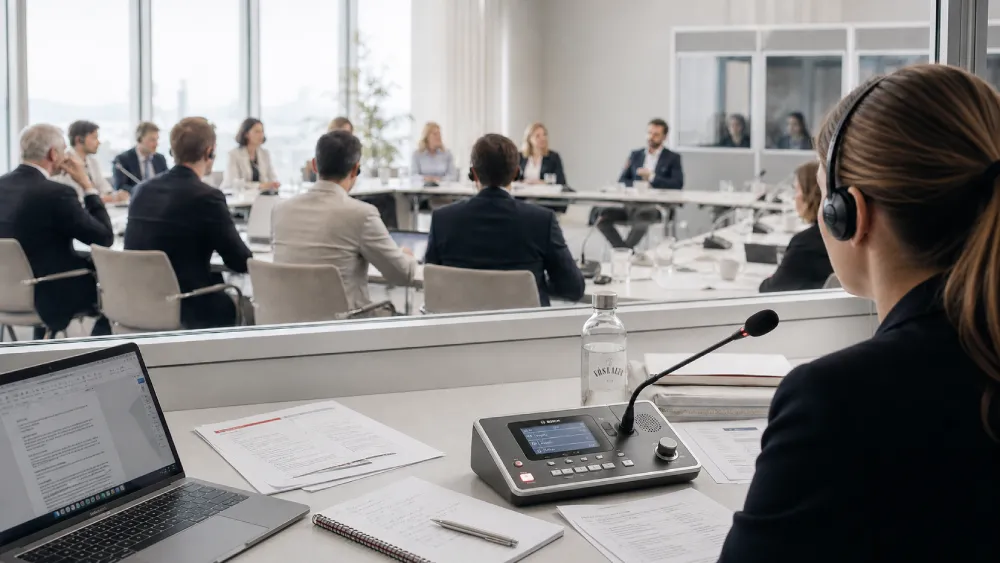
Picture the room. Someone flew in from Bucharest this morning. Someone else took the overnight train from Warsaw. There’s a delegate from Lyon who’s been in three meetings already this week, and someone from Munich who’s been on the EWC for eleven years and has opinions about all of it.
They work for the same company. That’s roughly where the common ground ends.
Different countries mean different labour law, different workplace cultures, different things keeping people up at night. A European Works Council meeting is where all of that lands in a single room, usually with a packed agenda, simultaneous translation running in multiple directions, and an expectation that something resembling consensus will emerge by the end of the day.
Getting the interpreting right at an event like this is the difference between a meeting that works and one that merely happens.
The Quiet Ones Aren’t Quiet
There’s something I’ve noticed repeatedly at EWC meetings, and it’s worth saying plainly: the delegates who don’t speak up are not always the ones with nothing to say.
Romanian representatives, in my experience, are sometimes written off as passive: they listen, they nod, but they don’t say much. The charitable reading is that they’re reserved. The less charitable one is that they’re not particularly engaged. In most cases, neither is true.
What’s actually happening is simpler, and more avoidable: they weren’t offered interpreting. At some point during the planning, someone made a judgement call — Romanians speak English, so we’ll leave them to it.
And yes, many do. But there’s a world of difference between reading a document in English at your own pace and following a fast-moving, emotionally charged debate in a language that isn’t yours. When you’re not entirely sure you’ve caught every nuance, and you’re definitely not sure you’d phrase your response correctly, speaking up in front of twenty colleagues from across Europe starts to feel like a gamble. So you don’t. You sit there, you follow as best you can, and the thing you actually wanted to say — the thing you know from your own site, from your own experience — stays unsaid.
A set of headphones on the table changes all of that.
Heat Changes Everything
Simultaneous interpreting has a built-in time lag. It’s small — a matter of seconds — but it’s unavoidable. The interpreter listens, processes and renders, and all of that happens just behind the speaker, not alongside them. In a calm, well-structured presentation, nobody notices.
In an argument, it’s a different story entirely.
When delegates are fired up, when people are talking over each other and the discussion keeps doubling back on itself, those few seconds of lag start to compound. The person listening through headphones is always slightly behind the room. By the time they’ve processed what was said and formed a response, the moment has passed and the conversation has moved on without them.
This is why how an EWC meeting is chaired matters as much as how it’s interpreted. One speaker at a time, proper pauses, space to finish a thought before the next one begins are what makes the interpreting work at all.
A False Economy That Costs More Than Money
Here’s a pattern I come across regularly: a company runs its EWC meeting in a different European city each year. Budapest one year, Lisbon the next, perhaps Kraków after that. It’s a good instinct, as it comes with visiting local sites, building relationships, and reminding everyone that the council represents real places and real people.
The mistake comes when the logic extends to the interpreting team. You’re in Budapest, so you hire Budapest interpreters. Next year you’re in Lisbon, local interpreters again. It looks efficient because it keeps travel costs down.
What it actually means is that your interpreting team walks into the room cold every single time.
Every company has its own internal language: the abbreviations, the names of initiatives that everyone in the room knows but that aren’t written down anywhere, creative names of innovative projects and bookkeeping software. Every EWC has its own history: the issues that have been running for three years, the friction between certain delegations, the topic that always generates forty-five minutes of debate regardless of how it’s framed on the agenda. An interpreter who is new to your organisation has none of that. They’re competent, certainly — but they’re spending cognitive energy on context that a returning interpreter already has. And cognitive energy spent on context is cognitive energy not spent on the actual interpreting.
The delegates notice. They might not be able to say exactly why the session felt rougher than usual, but they notice.
Preparation Is Not Paperwork
The agenda arrives punctually, almost always. The supporting materials — the presentations, the reports, the background briefings — arrive later, if they arrive at all.
An interpreter needs to know what’s actually going to be discussed: what the restructuring proposal says, what the figures in the annual report mean, what the technical term in the health and safety update refers to in each of the languages in the room. Without that, they’re interpreting words. With it, they’re interpreting meaning. The difference, in a meeting where the stakes are real, is considerable.
Sensitivity is often cited as the reason documents can’t be shared in advance. It’s a reasonable concern and an easy one to address: a confidentiality agreement, which interpreters sign as a matter of routine.
One more thing worth knowing about larger EWC sessions: when you have seven or eight languages in the room, direct interpretation between every pair isn’t always possible. What usually happens instead is relay — one interpreter renders into a bridge language, typically English or French, and colleagues working into other languages pick up from there. It’s an elegant solution when the team is tight-knit and accustomed to working together. When they’ve never met before, it’s a liability.
The Delegate from Bucharest Has Something to Say
Organising a European Works Council meeting is a significant undertaking, and interpreting tends to get treated as one of the last things to sort out — after the venue, the catering, the agenda, the travel arrangements.
It should be one of the first.
Bring the interpreting team in early. Keep the same team year on year wherever possible. Share the materials in advance, under whatever confidentiality arrangements you need. These aren’t niceties. They’re what determines whether the delegate from Bucharest — the one who took the overnight train and has been sitting quietly all morning — actually gets to be part of the conversation, or just present for it.
There’s a meaningful difference between the two. It’s worth getting it right.
Latest Articles


Leave a Reply
You must be logged in to post a comment.